
Last Updated on July 20, 2026 by Asheesh Kumar
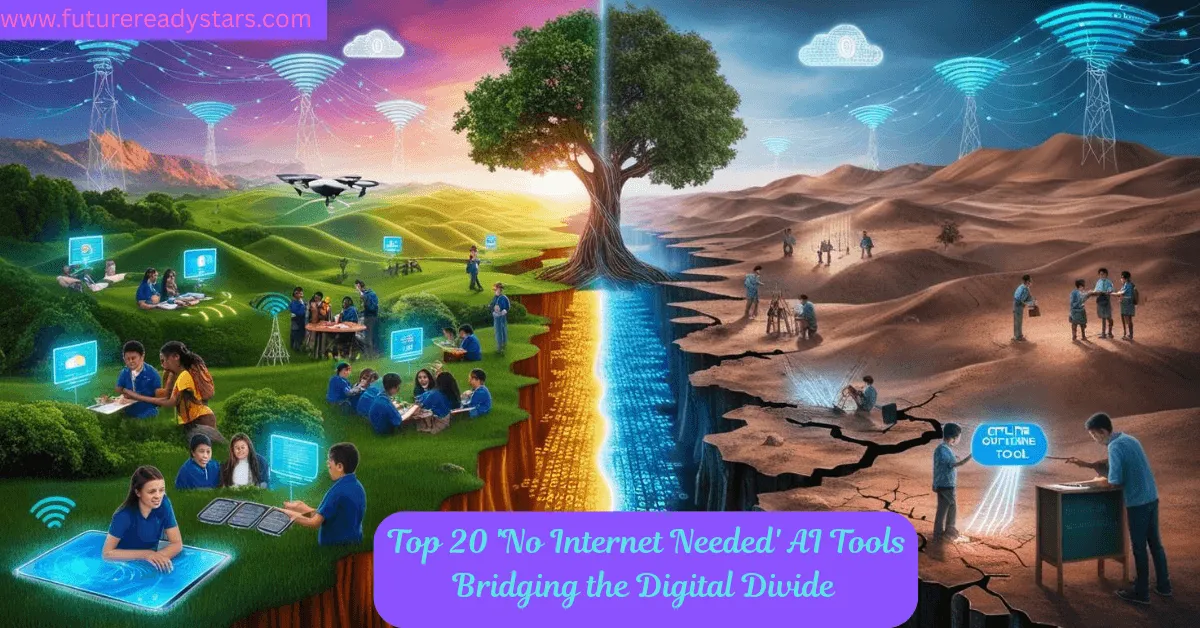
Offline AI tools are artificial intelligence systems that work without an internet connection. In 2026, they are becoming critical for rural schools, low-income communities, disaster zones, and developing regions where stable connectivity is unavailable. With 2.6 billion people still offline, the ‘cloud’ isn’t an option for everyone. We’ve curated the top tools actually working today…”
So, what’s the plan? First, we’ll explain why AI without internet is a big deal. Then, we’ll show you 20 awesome tools for edtech for rural students and low-income learners.
In this guide, you’ll discover:
- Why offline AI tools are critical in 2026
- 10 real offline AI tools you can use today
- 10 future and experimental concepts shaping tomorrow’s classrooms
- Real-world case studies from India, Africa, and Latin America
Let’s explore how AI is finally becoming accessible to everyone.
Can AI Really Work Without Internet?
Yes—but it depends on the tool. Some AI apps process everything directly on your phone, tablet, or computer, allowing them to work even without an internet connection. Others only need internet for installation or occasional updates before continuing to work offline. In this article, we’ve included both types and clearly labeled them so you know exactly what to expect.
Also Read: Top 10 AI Gadgets for Students in 2026
Top 20 Offline AI Tools: Bridging the Gap Without the Web
Now, let’s meet 20 clever tools—Some tools here are real and ready to use, while others are exciting possibilities for 2026
Real Offline AI Tools (Available Today)
1. Kolibri — Learning Without Limits
If I had to recommend just one offline learning platform for schools with limited internet, Kolibri would be at the top of the list.
It allows schools to store educational content like Khan Academy videos, textbooks, quizzes, and interactive lessons on a local server. Students simply connect to the school’s local Wi-Fi—no internet required.
That’s why Kolibri is already being used in many rural schools, refugee camps, and community learning centers around the world.
Status: Real & Widely Used
Best For: Schools with no internet connection.
2. RACHEL (Remote Area Community Hotspot for Education and Learning)
Imagine carrying an entire digital library in a small box.
That’s exactly what RACHEL does.
It creates a local Wi-Fi network filled with offline educational resources, including Wikipedia, Project Gutenberg books, Khan Academy content, and TED Talks. Students can connect using their phones or laptops without needing internet access.
For remote schools, it’s one of the closest things to having the internet without actually being online.
Status: Real
Best For: Rural libraries and community centers.
3. PlantVillage Nuru — Farming AI for the People
Although it wasn’t originally designed for classrooms, PlantVillage Nuru has become a powerful learning tool for agricultural education.
Using AI directly on the device, it can identify crop diseases by simply scanning a plant with a smartphone camera. Farmers receive instant recommendations—even in areas with no internet connection. For students studying agriculture or environmental science, it’s a great example of how offline AI can solve real-world problems.
Best For: Agricultural education and vocational training.
🔹 Status: Real
4. Amira — AI Reading Coach (Offline Mode)
Reading becomes much easier when someone listens and corrects your mistakes.
Amira works like a digital reading coach. It listens as children read aloud and provides feedback on pronunciation, fluency, and reading confidence. Some school deployments also support low-connectivity environments, making it useful in classrooms where internet access isn’t always reliable.
Status: Real.
Best For: K-5 Literacy.
Also Read: AI Tools Students Use for Smart Exam Practice & Revision (2026)
5. Photomath — Math Help on the Go
Photomath has helped millions of students understand mathematics—not just solve it.
Students simply point their phone camera at a math problem, and the app explains each step in a clear and easy-to-follow way. While some advanced features require an internet connection, many of its core solving features continue to work offline, making it a useful companion during travel or in areas with limited connectivity.
The biggest advantage isn’t getting the answer—it’s understanding how the answer is reached.
Best For: Homework help without data plans.
🔹 Status: Real
6. AI SpeakPen — Translate and Learn Anywhere
Learning a new language becomes much easier when you have instant translations in your pocket.
AI SpeakPen scans printed text and translates it into multiple languages without relying on a constant internet connection. It’s especially useful for students reading books or learning English in areas with limited connectivity.
🔹 Status: Real
7. FlashLearn Printer — Print Flashcards Without Wi-Fi
FlashLearn Printer takes a different approach by turning digital study material into printed flashcards. Students can revise vocabulary, formulas, and key concepts without needing a screen or an internet connection.
🔹 Status: Real
8. Ustad Mobile — The Offline LMS
Ustad Mobile is an open-source app designed specifically for offline learning. It allows educators to create courses that students can download once and run offline, syncing progress only when they eventually find a connection (Peer-to-Peer sharing).
Best For: NGOs and remote training.
Status: Real
9. Safebandd / Offline GPS Wearables
Replacing “SafeBot Wristband.” Wearable tech for schools in disaster-prone areas now uses “Mesh Networking” (like LoRaWAN) to track student location and attendance without cellular data. Devices like gotenna or specific LoRa tags are being used for campus safety.
Status: Real
Best For: Student safety in remote zones.
10. TinyML Kits (Raspberry Pi & Arduino)
Replacing the concept of “TutorChip.” In 2026, STEM education is using “TinyML”—running simple AI models on tiny microcontrollers like the Raspberry Pi Pico or Arduino Nano. Students can build voice recognition or gesture control devices that run 100% offline.
Status: Real
Best For: Computer Science & STEM students.
Also Read: From Chalkboards to Chatbots: The Evolution of Teaching with AI
Emerging or Conceptual Offline AI Tools (Vision for 2025)
11. SolarAI Tablet — The Solar-Powered Genius
No power? No problem. This solar-charged AI tablet comes preloaded with educational content and adaptive AI tutors. Students can learn math, science, and language—even in the middle of a desert or a village without electricity.
🔹 Status: Conceptual
12. NeuroBand Lite — Brain Training, No Cloud Required
This stripped-down version of a popular AI headband tracks focus and attention using onboard sensors and AI chips. Great for exam prep in areas with zero connectivity.
Best for: Students needing focus and concentration tools.
🔹 Status: Emerging
13. SmartSlate — The Offline Classroom Companion
A chalkboard-sized writing slate with built-in AI feedback. It gives suggestions on math problems, handwriting, and spelling—all without internet. Stores written content for up to 7 days before automatic deletion
Designed for: Teachers and students in low-tech classrooms
🔹 Status: Conceptual
14. CodeCube — Learn Programming Anywhere
This handheld device teaches Python, Scratch, and logic-based games offline. Perfect for introducing coding in schools with limited infrastructure. Ideal for: Beginners in coding with no internet access.
🔹 Status: Emerging
15. MindBox — Mental Wellness On-the-Go
A portable AI-powered device with breathing exercises, emotional check-ins, and stress reduction activities that work without a connection.Contains over 200 preloaded mental wellness exercises. Helpful for: Mental wellness programs in schools.
🔹 Status: Emerging
16. MathMaster Cube — Your Personal Math Coach
Shake the cube, and it displays math challenges, then uses AI to walk you through the solutions step by step—no apps or downloads needed. Covers arithmetic, algebra, geometry, and basic calculus concepts.
Recommended for: Independent math practice at home or school.
🔹Status: Conceptual
17. SpeakBot Mini — Voice Assistant Without the Web
It listens, responds, and even cracks jokes—but everything it does is pre-trained and runs without web access. Pre-trained on over 1 million voice commands; operates offline with a battery life of up to eight hours.
Fun for: Young learners exploring tech.
🔹Status: Conceptual
18. Vocabulink Bracelet — Boost Word Power
These wearable lights up when it’s time to learn a new word. It quizzes you daily, tracks your progress, and never needs a connection.
Designed for: Building daily vocabulary on the go.
🔹Status: Emerging
19. AI ChalkMate — Teacher’s Best Offline Friend
Helps teachers plan lessons, give feedback, and even suggest creative ideas, all processed on-device.
Ideal for: Teachers in low-resource classrooms.
🔹Status: Conceptual
20. VisionBoard — Offline AI for Special Ed
An interactive board with symbols and images that help students with learning differences communicate and learn.
Critical for: Inclusive education in special needs environments.
🔹Status: Conceptual
Also Read: AI vs Human Grading: Which Is Fairer for Student Assessment?
Case Studies: Offline AI in Action
These tools aren’t just ideas—they’re already sparking change. Here’s how they’re lighting up lives in Rural India and Sub-Saharan Africa.
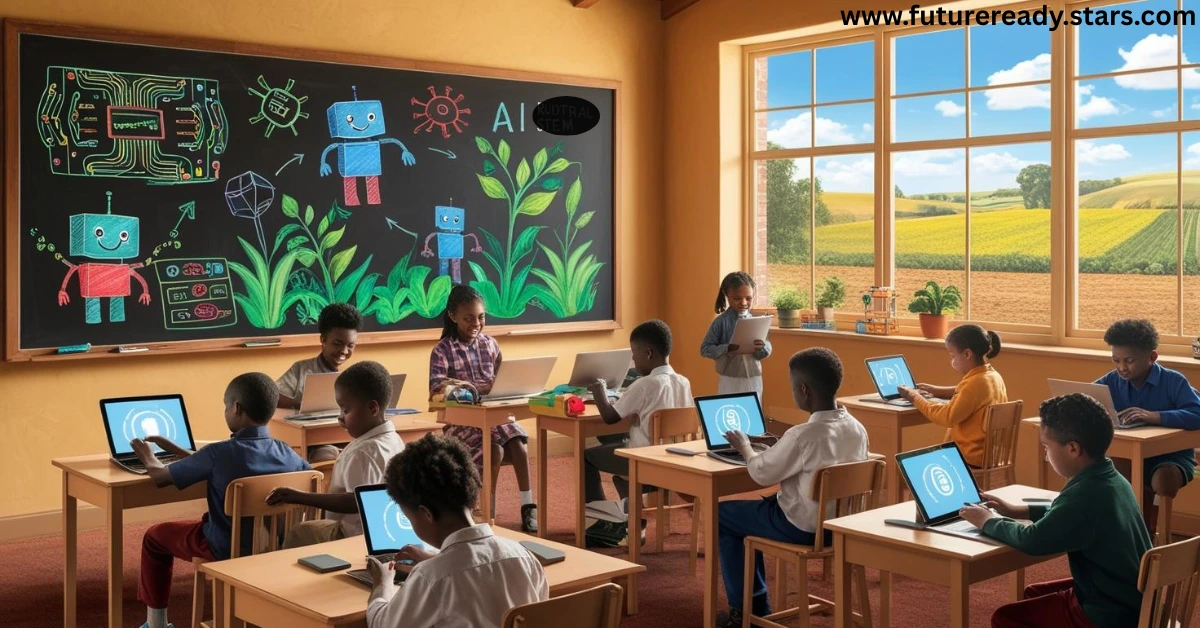
- Rural India: In Rajasthan’s villages, solar-powered study tablets are rewriting futures. Kids who’d never touched a laptop are now learning science and English via AI tutors. One school saw test scores soar by 30% in six months—proof that AI tools for low-income students work.
- Sub-Saharan Africa: In Kenya, PlantVillage Nuru is a farmer’s best friend. By photographing diseased crops, farmers get instant fixes, boosting yields by 20%. It’s AI without internet keeping families fed and thriving.
- Latin America: TutorChips and SafeBot Wristbands are being used in mountainous villages to bring structure and safety to remote classrooms.
These snapshots show how offline AI tools turn challenges into victories, one community at a time.
AI isn’t just for cities. Discover how rural America is leading the STEM revolution: AI-Powered STEM: Closing the Tech Gap in Rural America
How to Get These Tools
Want in? Here’s how to snag these offline AI tools for your school, NGO, or personal use:
- NGOs: Organizations like One Laptop per Child and UNESCO hand out tools like Kolibri and tablets to underserved regions.
- Open-Source Hubs: Grab freebies like Offline Wikipedia or PlantVillage Nuru online.
- Schools & Governments: Some regions offer offline AI programs—check local education offices.
- Tech Giants: Google, Microsoft, and others provide offline modes for apps like Translate—often at no cost.
Start by exploring app stores or contacting these groups. Bringing AI education accessibility to your corner of the world is easier than you think!
My Take
After researching dozens of offline learning technologies, one thing became clear: The future isn’t about replacing online AI. It’s about giving every student access to intelligent learning—whether they have fast internet or no internet at all.
That’s why offline AI could play a much bigger role in education over the next few years, especially in rural schools, community libraries, and developing regions.
Conclusion: The Future of Offline AI Learning
As we move through 2026, the definition of “Advanced AI” is changing. It’s no longer just about massive data centers; it’s about efficiency, accessibility, and equity.
Offline AI tools are the future for the 2.6 billion people waiting to join the global conversation. Whether you’re a policymaker, a tutor, or a tech enthusiast, supporting offline-first technology is the most impactful move you can make.
So, which of these tools would YOU bring to a remote village school? Let us know in the comments—and don’t forget to explore more educational innovations at FutureReadyStars.com.

My name is Asheesh Kumar i am a dedicated educator and have a deep understanding of artificial intelligence, I aim to transform traditional learning methods by integrating cutting-edge technology and AI-driven tools into education. As a teacher and personal tutor, I have the privilege of working with many students and understanding their individual strengths and weaknesses. With this insight, I know how to help each student overcome their challenges and improve their skills. Understanding each student’s unique learning style and needs allows me to tailor lessons that maximize their potential. This holistic approach not only boosts academic performance but also builds confidence and a lifelong love for learning.
I enjoyed reading this article. Thanks for sharing your insights.
thanks a lot for this appreciation
I don’t think the title of your article matches the content lol. Just kidding, mainly because I had some doubts after reading the article.
ok