
Last Updated on July 22, 2026 by Asheesh Kumar
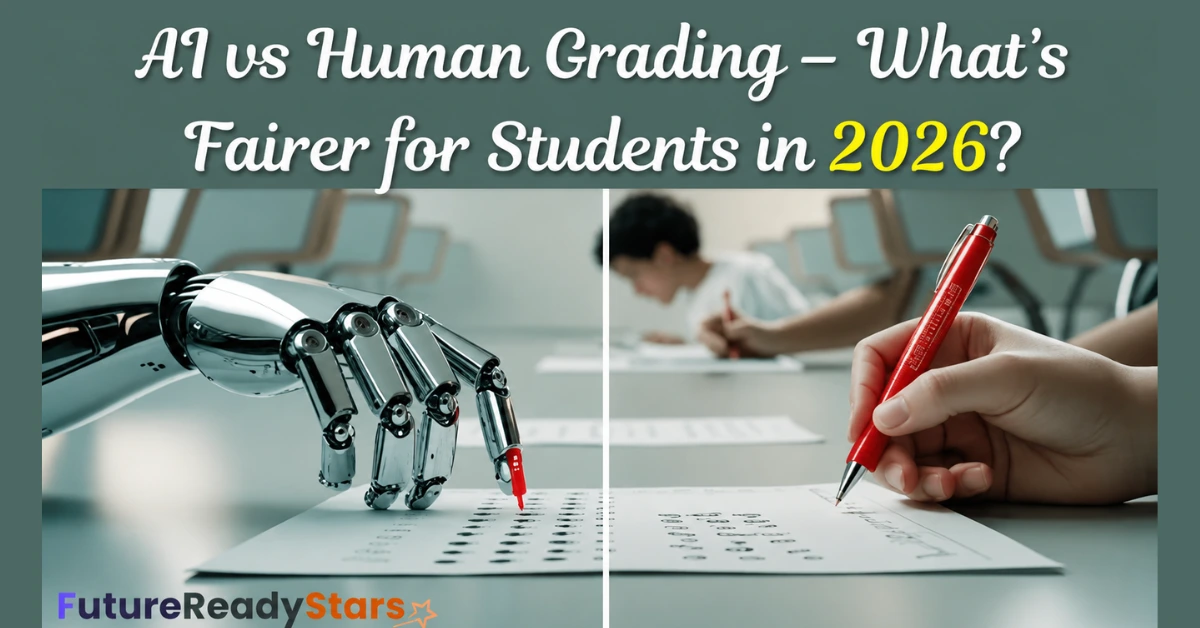
In today’s classrooms, Artificial Intelligence is rapidly making its way into areas once considered purely human-driven. One major shift is in how students are graded. But as AI tools become more common, a big question arises: Can AI really grade students more fairly than human teachers? Or are there key elements of human judgment that machines still can’t replace?
Also Read: How I Built a No-Code AI Chatbot for CBSE & US EducationWhat Is AI Grading?
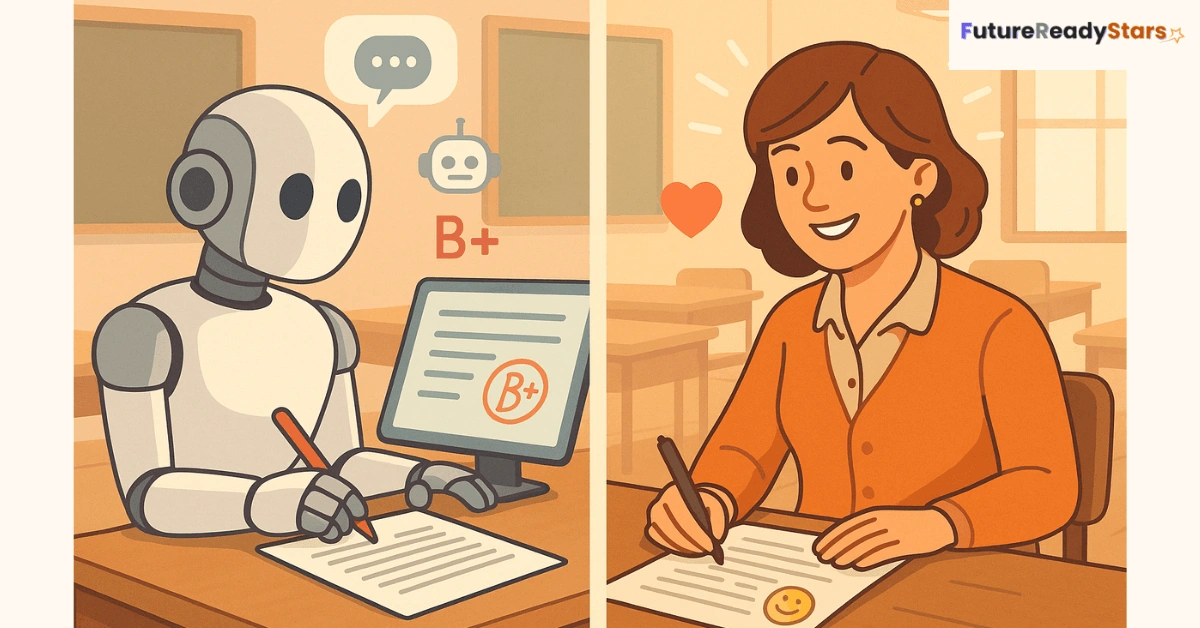
AI grading is the use of artificial intelligence to evaluate student work automatically or with minimal human involvement. Depending on the type of assignment, AI can analyze answers, compare them with grading criteria, and generate scores or feedback within seconds.
Today, many educational platforms already use AI to support teachers rather than replace them. These systems are commonly used to:
- Grade multiple-choice or short-answer questions
- Check essays for grammar and structure
- Give quick feedback on writing
Tools like Gradescope, Turnitin, and Grammarly already help teachers save time. Some even try to match how a teacher might grade, at least for basic tasks.
But while AI is fast and consistent, it still doesn’t understand things like tone, creativity, or a student’s intent the way a human can.
Also Read: Top 10 AI Tools That Predict Exam Questions (2025’s Secret Weapon)Why Are Schools Turning to AI Grading?
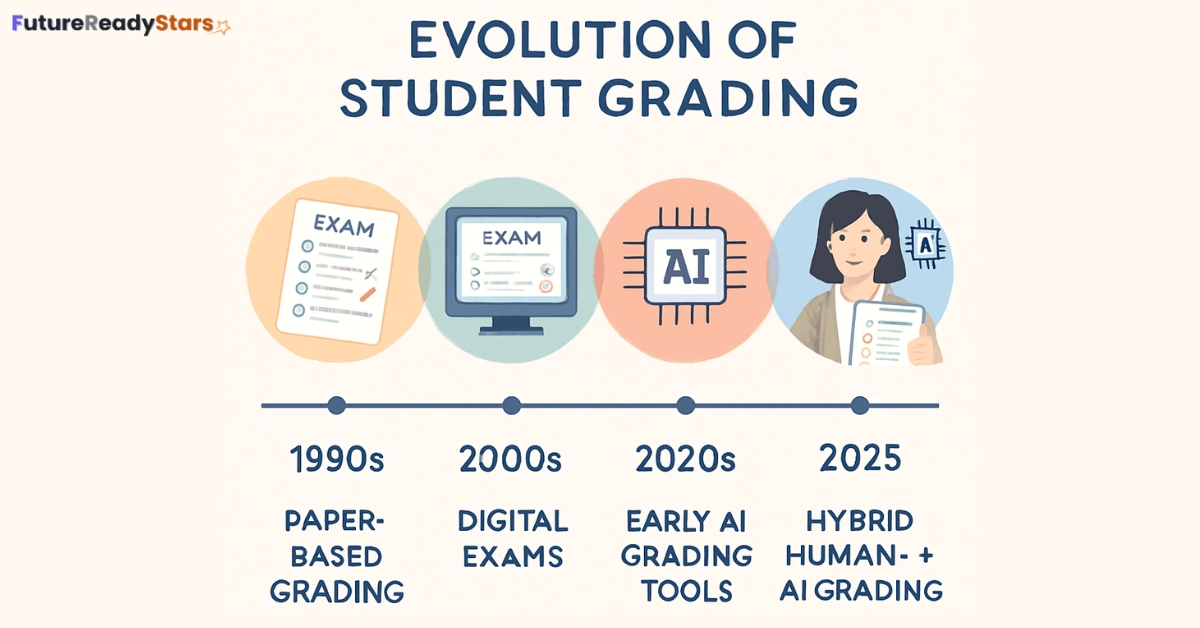
Schools in the U.S. are facing a tough mix of problems. Many classrooms have too many students, and not enough teachers. Plus, grading takes a lot of time—time that teachers often don’t have.
Because of this, some schools are using AI to help. It’s fast, doesn’t get tired, and can score student work the same way every time. That consistency can be a big help when you’re managing large workloads.
The goal is to free teachers from repetitive grading so they can focus more on teaching and supporting students. According to the U.S. Department of Education, AI can be a supportive tool when used responsibly.
Also Read: Top 20 ‘No Internet Needed’ AI Tools Bridging the Digital Divide in 2025Benefits of AI Grading
AI grading isn’t perfect, but it offers several practical advantages when used responsibly.
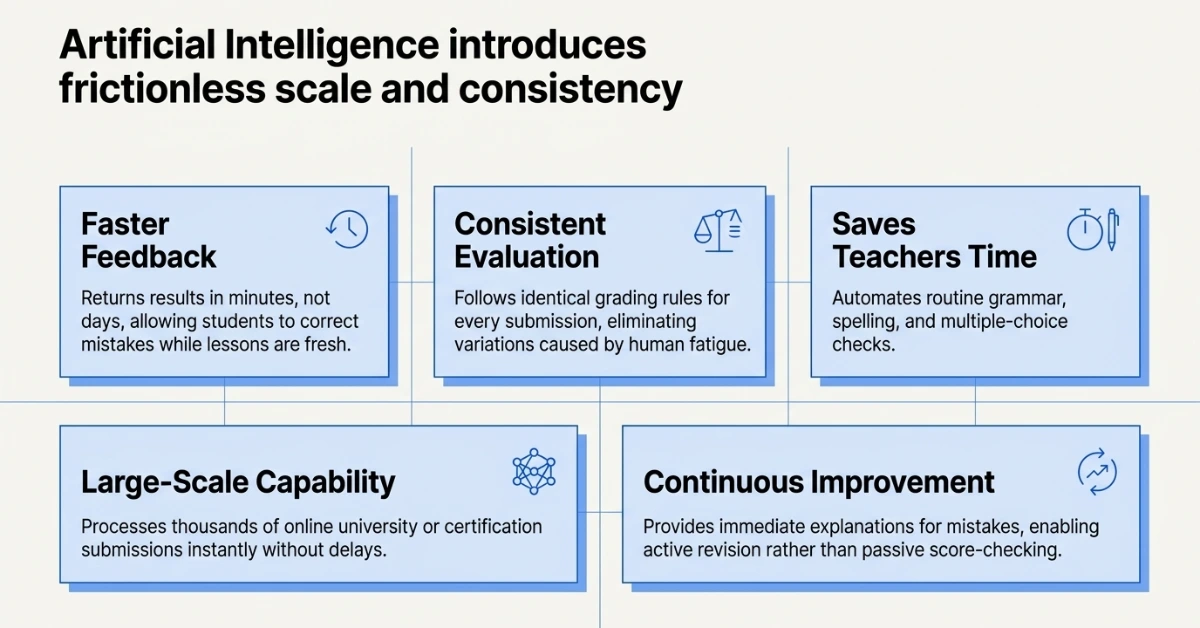
1. Faster Feedback
One of AI’s biggest strengths is speed.
Instead of waiting several days for results, students can often receive feedback within minutes. Quick feedback helps students identify mistakes while the lesson is still fresh in their minds, making it easier to improve before the next assignment.
2. More Consistent Evaluation
Human grading can sometimes vary because of fatigue, workload, or personal interpretation. AI follows the same grading rules for every submission, which can make assessments more consistent—especially in objective tasks like quizzes or short-answer questions.
3. Saves Teachers Valuable Time
Grading hundreds of assignments is repetitive work.
By automating routine tasks such as checking grammar, spelling, formatting, or multiple-choice answers, AI gives teachers more time to focus on teaching, lesson planning, and helping students who need extra support.
4. Useful for Large-Scale Assessments
Online learning platforms and universities often manage thousands of student submissions. This system can process large numbers of assignments quickly, making it easier to conduct online courses, certification programs, and practice tests without creating long delays in grading.
5. Helps Students Improve Continuously
Many AI-powered learning platforms don’t just assign marks—they also explain mistakes and suggest improvements. This allows students to revise their work, practice weak areas, and develop better study habits instead of simply looking at a final score.
Is AI Grading Really Fair?
At first glance, AI grading seems like the perfect solution. It doesn’t get tired, doesn’t have a bad day, and follows the same grading rules for every student. That sounds fair. But fairness in education is about much more than giving everyone the same score based on the same rules.
A good teacher doesn’t just look at the final answer. They also notice a student’s effort, creativity, improvement over time, and the way ideas are presented. These are things AI still struggles to understand.
That’s why many educators believe AI should support assessment—not replace human judgment.
Where AI Grading Still Falls Short
1. Limited Understanding of Context
AI struggles to understand creative expression, humor, or cultural references. For example, a student might use slang or regional language that an algorithm flags as incorrect, even if it makes sense in context.
2. Over-Reliance on Grammar and Structure
Many AI systems focus heavily on surface-level writing issues—grammar, spelling, and sentence structure. This can overlook deeper qualities like critical thinking, originality, or empathy.
3. Algorithmic Bias
While AI aims to remove bias, it can still reflect the biases in the data it was trained on. If training data favored certain writing styles or dialects, students outside that norm may be unfairly penalized. MIT Technology Review explored this in depth.
“AI should be treated as a teaching assistant, not a teacher. It’s great at catching surface-level errors and speeding up grading, but it lacks the emotional intelligence and context-awareness that students need from educators.” — Dr. Melissa Grant, Education Technology Specialist, University of California
Also Read: ChatGPT for Students: How to Use AI Ethically in School (2025 Guide)Human Grading: Still Important?
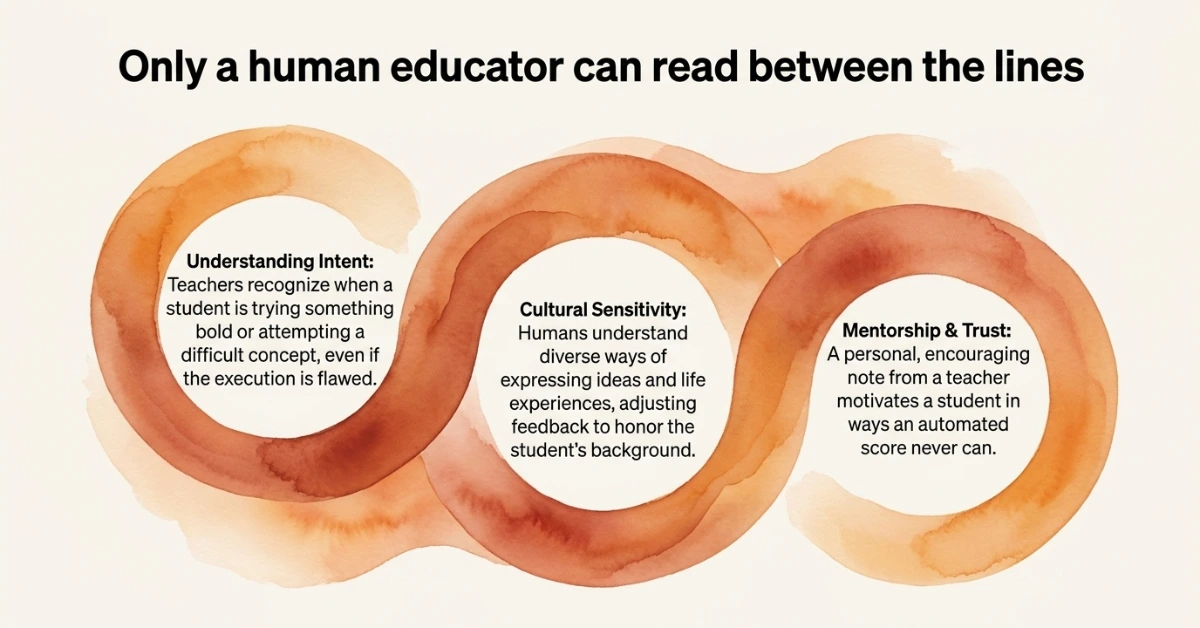
While AI is fast, only teachers can read between the lines and connect with student intent.
Teachers bring life experience, emotional understanding, and subject expertise to grading. They can recognize when a student is trying something new, showing effort, or expressing a unique idea—even if the execution isn’t perfect.
Here’s what human grading still does better:
- Understanding Intent: A teacher can spot when a student is trying something bold, even if it’s not perfectly executed.
- Cultural Sensitivity: Humans can recognize diverse ways of expressing ideas and adjust feedback accordingly.
- Mentorship: Feedback from a teacher can include encouragement and personal notes that motivate students.
Edutopia highlights how meaningful teacher feedback can build trust and learning.
Can AI and Teachers Work Together?
The most balanced approach may be a hybrid one:
The best approach might not be choosing between AI or teachers—it could be using both together. Think of it like this: AI can take care of the repetitive stuff, like checking grammar or scoring multiple-choice quizzes. This saves time and keeps things consistent.
Meanwhile, teachers can focus on what AI still can’t do well—like understanding a student’s thought process, creativity, or effort behind an answer. For example, if a student writes a personal story with a powerful message but a few grammar mistakes, a teacher can recognize the meaning and encourage the student’s effort. An AI might just flag the grammar issues and miss the bigger picture.
By working together, AI supports teachers instead of replacing them. It’s about giving teachers more time to teach and connect with students while still getting the grading done faster.
Real-World Case Study: When AI & Humans Worked Together
Around the world, schools and universities are beginning to use AI as a grading assistant, not as a complete replacement for teachers.
For example, many educators use AI-powered tools to review grammar, spelling, and basic writing structure before they evaluate assignments themselves. This allows teachers to spend less time on repetitive corrections and more time giving meaningful feedback on ideas, creativity, and critical thinking.
Similarly, online learning platforms often use AI to grade quizzes and practice tests instantly. Students receive immediate feedback, helping them understand mistakes and improve without waiting days for results.
These examples show that AI works best when it supports teachers rather than making every grading decision on its own.
Also Read: AI and Teacher Collaboration: Redefining Modern ClassroomsAI vs Human Grading: A Quick Comparison
Both AI and teachers have strengths, but they excel in different areas.
Comparison Table: AI vs Human Grading
| Feature | AI Grading | Human Grading |
|---|---|---|
| Speed | ✅ Very fast | ❌ Time-consuming |
| Bias | ✅ Reduced (ideally)✅ | ❌ Can be biased |
| Context Understanding | ❌ Poor | ✅ Strong |
| Personal Feedback | ❌ Generic | ✅ Personalized & encouraging |
| Scalability | ✅ High | ❌ Low |
| Emotional Insight | ❌ None | ✅ Deep |
So, is AI grading fairer? In some ways, yes—especially when it comes to consistency and speed. But human grading offers depth, context, and care that machines can’t yet match.
Final Thoughts: Who Should Grade?
he answer isn’t as simple as choosing AI or teachers. Both have important roles.
AI can save time, reduce repetitive work, and provide instant feedback. Teachers bring experience, empathy, subject knowledge, and the ability to understand each student’s unique learning journey. When these strengths are combined, students receive both fast feedback and meaningful guidance.
That’s why many education experts believe the future of assessment isn’t AI vs humans—it’s AI working alongside humans.
Frequently Asked Questions (FAQs)
Not yet. AI can handle basic grading tasks like grammar checks or multiple-choice answers, but it still struggles with creativity, nuance, and context that human teachers understand better.
Yes, AI can reflect bias if it’s trained on biased data. For example, it may misinterpret regional dialects or cultural expressions if not properly designed and tested.
Yes, tools like Gradescope and Turnitin are already used in many schools to assist with grading. However, they are usually used alongside teacher evaluation, not in place of it.
It can. By automating repetitive grading tasks, AI gives teachers more time to focus on lesson planning, student support, and personal well-being.
Subjects like math, science, and grammar-based language tests are easier for AI to grade. Essays, creative writing, and critical thinking tasks still need human input.
Final Thoughts
Artificial intelligence is changing education, but it isn’t replacing the role of teachers. Instead, it’s becoming a valuable assistant that helps educators save time, provide faster feedback, and manage growing classroom workloads.
At the same time, students still need teachers who can recognize effort, encourage creativity, understand emotions, and guide learning beyond test scores. The most effective classrooms of the future are unlikely to rely only on AI or only on traditional grading.
Instead, they will combine the speed and efficiency of AI with the experience and empathy of teachers. Because in the end, fair assessment isn’t just about assigning marks—it’s about helping every student learn, grow, and reach their full potential.
Join the Conversation
What do you think? Would you trust an AI to grade your work—or your child’s? Share your thoughts in the comments or visit FutureReadyStars.com to learn more about AI in education.

My name is Asheesh Kumar i am a dedicated educator and have a deep understanding of artificial intelligence, I aim to transform traditional learning methods by integrating cutting-edge technology and AI-driven tools into education. As a teacher and personal tutor, I have the privilege of working with many students and understanding their individual strengths and weaknesses. With this insight, I know how to help each student overcome their challenges and improve their skills. Understanding each student’s unique learning style and needs allows me to tailor lessons that maximize their potential. This holistic approach not only boosts academic performance but also builds confidence and a lifelong love for learning.
Your article helped me a lot, is there any more related content? Thanks!
Your point of view caught my eye and was very interesting. Thanks. I have a question for you.
Your article helped me a lot, is there any more related content? Thanks!