
Last Updated on July 22, 2026 by Asheesh Kumar
From chalkboards to chatbots, education has changed dramatically. A few decades ago, a classroom meant chalkboards, textbooks, and teachers writing notes while students copied everything into their notebooks. Today, that same classroom might include AI tutors, smartboards, chatbots, and students getting instant explanations with just a question.
The journey from chalkboards to chatbots isn’t just about new technology—it’s about how teaching itself has evolved. Every stage, from traditional classrooms to digital learning and now AI-powered education, has changed the way teachers teach and students learn.
Artificial Intelligence is no longer a futuristic idea. In 2026, many teachers use AI to create lesson plans, prepare quizzes, simplify complex topics, and reduce repetitive work. Students use AI tools to revise faster, practice difficult concepts, and receive personalized learning support whenever they need it.
In this article, we’ll explore how education has evolved over the years, what role AI is playing today, and why the future of teaching will likely combine the strengths of both technology and human educators.
🕰️ Education has evolved—but has it improved for every student? Let’s find out.
Also read: How I Built a No-Code AI Chatbot for CBSE & US EducationEra 1: Chalk & Talk (Before 2000)

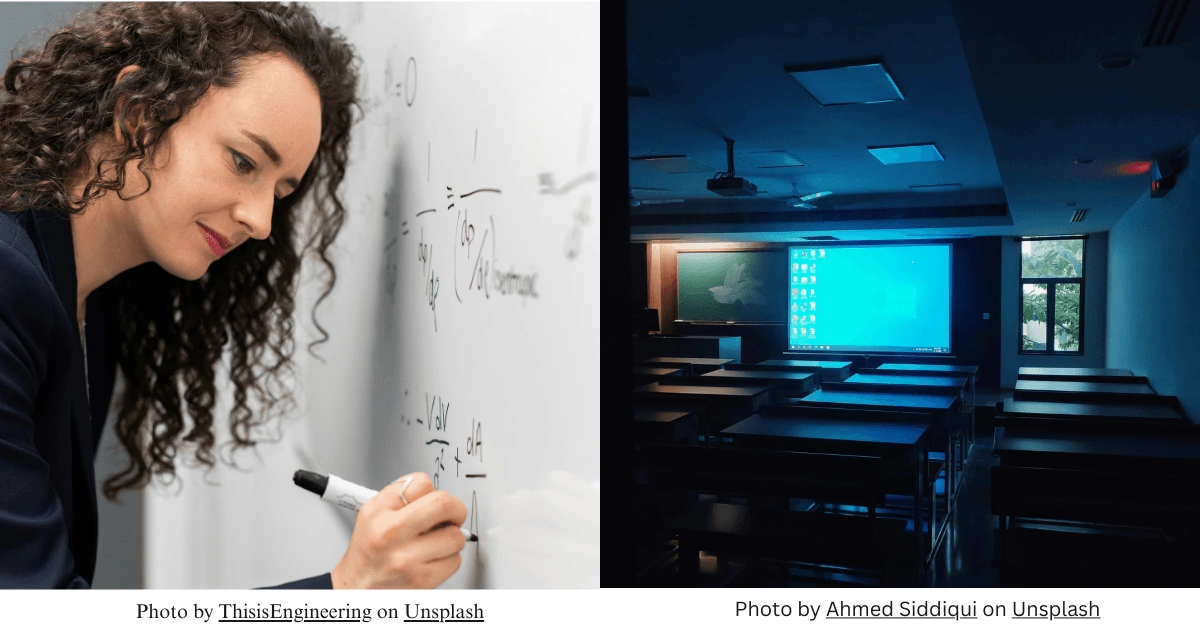
In the 20th century, classrooms followed a simple model. Teachers stood at the front. Students listened, wrote notes, and prepared for exams. The blackboard was the main tool. Everything was centered around the teacher’s voice and the textbook.
There was very little room for flexibility or creativity. Learning was mostly one-way. Teachers had to handle everything manually—grading, making lesson plans, checking homework.
Still, this system worked for its time. It trained generations of students with discipline and structure. But it had limits. It didn’t work equally well for every student, especially those who needed a different pace or style.
Era 2: Digital Classrooms (2000–2015)
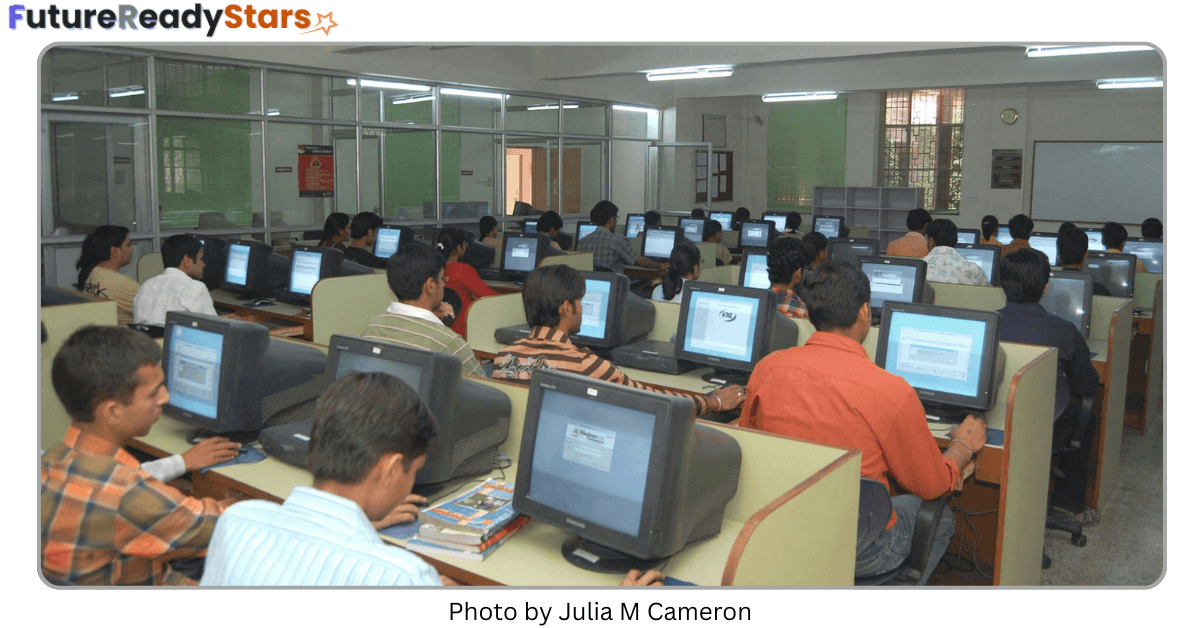
With the rise of computers and the internet, schools slowly started changing. Projectors, PowerPoint slides, and smartboards made classrooms more interactive. Computer labs became common. Students learned to type, search online, and use learning software.
This period also saw the first wave of online learning platforms. YouTube, BYJU’S, and Khan Academy allowed students to study at home at their own pace. Teachers began using digital tools to make lessons more engaging.
Even though technology was growing, teachers remained at the centre. Technology supported them, but didn’t change the core of how teaching worked.
Era 3: The Online Learning Boom (2016–2020)

The years leading up to and during the COVID-19 pandemic brought a major shift. Schools moved online almost overnight. Google Classroom, Zoom, and Microsoft Teams became the new classroom spaces.
Teachers learned to manage virtual classes. Students submitted homework through apps. Parents got more involved, helping children at home.
Online learning showed that education could happen outside the four walls of a classroom. But it also showed the gaps—not every student had internet, not every teacher was trained for digital tools. This is where the idea of using AI in education started gaining attention. EdSurge began reporting on this growing trend.
Also Read: Top 20 AI Tools Teachers Need in 2025 for Better ClassroomsEra 4: The AI-Powered Learning Revolution (2021–2026)
AI has transformed education faster than any previous classroom technology. What started with AI chatbots answering simple questions has evolved into intelligent learning assistants that help teachers save time and students learn more effectively.
Today, educators use AI to draft lesson plans, create quizzes, simplify difficult concepts, generate classroom activities, and provide quicker feedback. Students use AI tools to understand complex topics, summarize long chapters, practice exam questions, and receive personalized explanations whenever they get stuck.
Popular tools such as ChatGPT, Google Gemini, Claude, Khanmigo, and NotebookLM are becoming part of everyday learning. Rather than replacing textbooks or teachers, these tools act as study companions that make learning more interactive and accessible.
Here are a few ways AI is being used in classrooms today:
- Generate lesson plans and classroom activities in minutes.
- Create quizzes, worksheets, and practice questions for different learning levels.
- Provide instant explanations for difficult concepts in subjects like maths, science, and coding.
- Summarize lengthy chapters into easy-to-understand notes.
- Support personalized learning by adapting explanations to each student’s pace.
When used responsibly, AI doesn’t simply make learning faster—it helps create a more engaging and flexible learning experience for both teachers and students.
Also Read: AI Literacy 101: How to Teach AI to Students (A Practical Classroom Guide for 2026)From Teachers to AI Assistants: A Shift in Roles
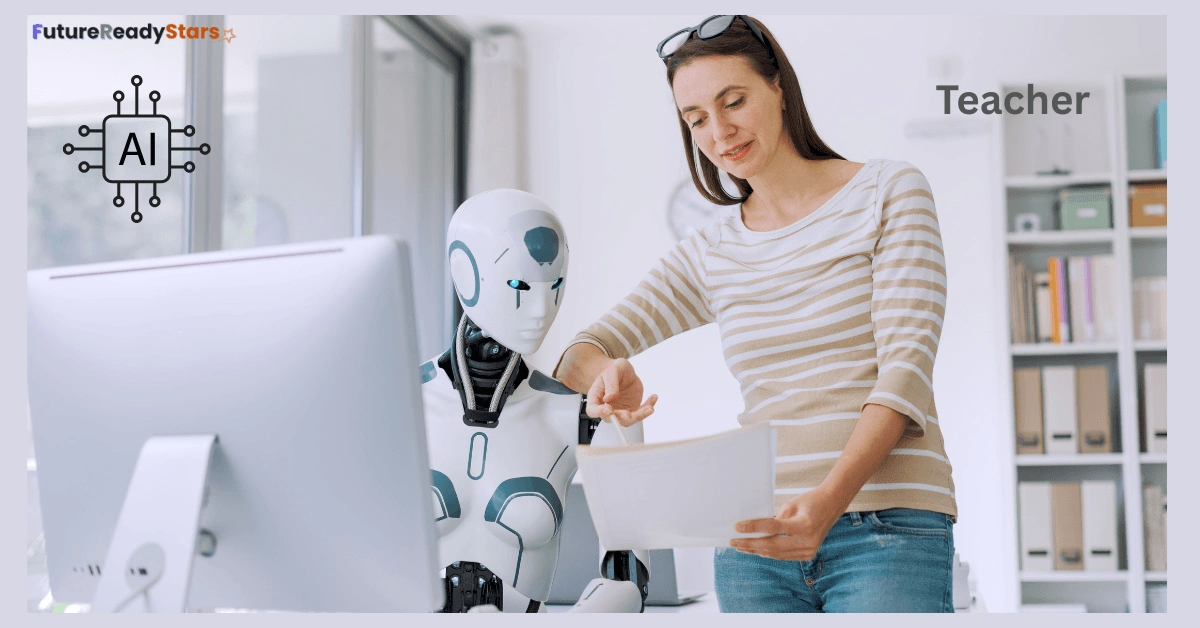
One of the biggest changes in modern education is that teachers are no longer expected to do every repetitive task themselves. Instead, AI helps automate routine work, allowing educators to spend more time on what matters most—teaching, mentoring, and supporting students.
For example, instead of spending hours preparing worksheets or checking basic grammar mistakes, teachers can use AI to complete these tasks in minutes. The extra time can then be used for classroom discussions, one-to-one guidance, and helping students develop critical thinking skills.
This shift has also changed the role of AI. It is no longer viewed as a replacement for teachers but as a teaching assistant that handles repetitive work while educators continue to provide empathy, creativity, motivation, and human judgment.
The most successful classrooms are likely to be those where teachers and AI work together rather than compete with each other.
Also Read: AI Literacy for Kids in 2026: Parents’ Guide to Teach AI at HomeThen vs Now: How Classrooms Have Changed
| Traditional Classroom | AI-Supported Classroom |
|---|---|
| Chalkboards and textbooks | Smartboards and AI-powered learning tools |
| One lesson for everyone | Personalized learning paths |
| Manual grading | AI-assisted feedback and assessment |
| Printed notes | AI-generated summaries and study guides |
| Teacher explains once | Students can ask AI for additional explanations anytime |
Real-World Impact: Chalkboards to Chatbots in Action
This section highlights the real impact of the shift from chalkboards to chatbots through practical classroom stories.
In a Delhi school, teachers started using an AI tool to grade homework. What used to take hours now happens in minutes. This gave teachers time to hold extra sessions for students who needed help.
In the U.S., an English teacher used an AI chatbot to give grammar suggestions. But she still read each essay herself to give personal feedback. That mix of AI speed and human insight made a big difference.
What’s Next? Future of Teaching with AI
Education is continuing to evolve, and AI will likely become an even more natural part of everyday learning. Instead of replacing classrooms, future AI systems will help make learning more personalized, accessible, and engaging for every student.
In the coming years, we can expect classrooms to include AI-powered learning assistants that adapt lessons to each student’s pace, identify learning gaps, and recommend targeted practice activities. Teachers may also receive real-time insights into student progress, making it easier to provide support before small problems become bigger ones.
We’re also likely to see greater use of voice-based AI, interactive simulations, and multimodal learning tools that combine text, images, videos, and audio. These technologies can make complex topics easier to understand while giving students more ways to explore ideas beyond traditional textbooks.
However, as AI becomes more common in education, responsible use will become just as important as innovation. Schools and teachers will need to teach students how to verify AI-generated information, protect their privacy, and use these tools ethically rather than relying on them for every answer.
The future of education isn’t about smarter machines alone—it’s about creating smarter learning experiences where technology supports human potential.
Also Read: From Chalkboards to Chatbots: The Evolution of Teaching with AIFinal Thoughts
From chalkboards to chatbots, the classroom has evolved in ways we couldn’t imagine a few decades ago. Each stage brought new tools, but also new challenges.
AI is the latest tool in education, and it has great potential. But its real power comes when combined with the care, experience, and creativity of teachers.
In the end, the best classroom is one where both human and machine work together to help every student learn better.
Want to explore more about AI in education? Visit FutureReadyStars.com for tools, tips, and fresh insights.

My name is Asheesh Kumar i am a dedicated educator and have a deep understanding of artificial intelligence, I aim to transform traditional learning methods by integrating cutting-edge technology and AI-driven tools into education. As a teacher and personal tutor, I have the privilege of working with many students and understanding their individual strengths and weaknesses. With this insight, I know how to help each student overcome their challenges and improve their skills. Understanding each student’s unique learning style and needs allows me to tailor lessons that maximize their potential. This holistic approach not only boosts academic performance but also builds confidence and a lifelong love for learning.
Hello! I sent a request, but have not yet received a response. Perhaps my message did not go through. I would be very grateful if you could contact me via WhatsApp.
wa.me/+380951034806
Hi there! Hoping to get a reply soon. Please message me directly on WhatsApp – that’s the best way to reach me.
wa.me/+66993739062
Warm greetings! Hope you’re doing well.
I believe in empowering people to reach their goals. That’s why I provide financial grants for various projects and life situations. Let’s connect on WhatsApp +66960574873
Helpful piece. I was looking for something like this.
I especially liked the section on CDN technology
was really interesting. Going to bookmark this.
I have been curious about content delivery lately and this article breaks it
down nicely. Good work.
Came across this while looking up online video. Good find. The
points about bandwidth is often overlooked.
Really helpful info about how video sites work. Most people overlook
how much work goes into this. Sent this to someone who is interested in web
development.
Well done post. Stands out from the recycled articles you see on this topic.
Author has experience with the industry. Coming back to this.
I work in tech and this lines up with my experience. Especially the points about video encoding.
Good to see someone write about this correctly.
Only finished reading this and wanted to drop a note. Really well done.
The comparison of video formats was really clear.
That is one of the more detailed posts I found on streaming tech.
Straight to the point, just practical details. Thanks for putting this together.
I don’t think the title of your article matches the content lol. Just kidding, mainly because I had some doubts after reading the article.