
Last Updated on July 20, 2026 by Asheesh Kumar
Banned AI tools for students are sparking a quiet revolution in U.S. classrooms.
It’s midnight in Ohio. Emily, a high school junior, stares at her laptop, struggling with an essay on climate change. As the deadline looms, and her ideas are scattered. Desperate, she turns to ChatGPT, one of the most banned AI tools for students. Within moments, the AI delivers a crisp outline, complete with facts and arguments she hadn’t considered. She smiles, relieved. Meanwhile, her principal is drafting a memo to ban AI tools for students, convinced they’re stealing her ability to think for herself.
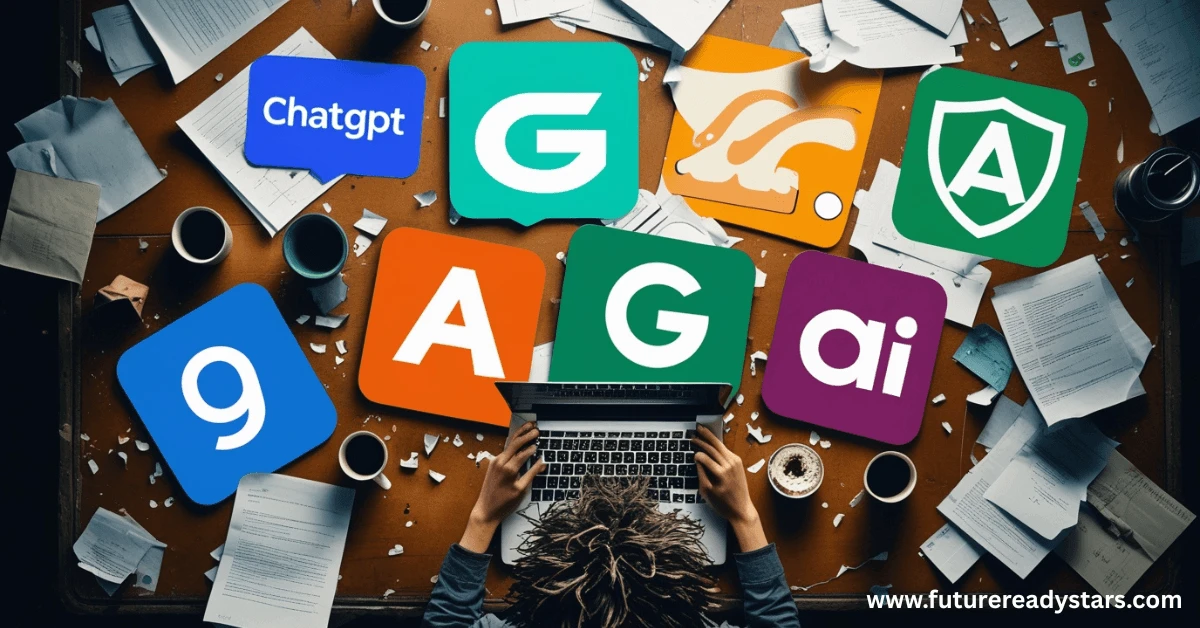
This tension isn’t isolated across the USA. Artificial intelligence is storming into classrooms, offering students a lifeline of instant help, creative boosts, and personalized learning. But schools are pushing back, slapping bans on these tools faster than you can say “plagiarism.” Why? Concerns about cheating, misinformation, and the slow fade of critical thinking. Yet, students are hooked—and for good reason.
In this article, we’ll dive into the top 15 banned AI tools for student, explore why educators are hitting the panic button, and uncover why students can’t let go. From ChatGPT’s meteoric rise to popular aids like Photomath these tools are rewriting the rules of education—and sparking a debate that’s anything but black-and-white.
Also read: Top 20 AI Tools Teachers Need in 2025 for Better ClassroomsTop 15 AI Tools Schools Often Restrict
Before we begin, one important clarification:
Most of these AI tools are not officially banned worldwide. In reality, policies vary from one school, district, or university to another. Some institutions block access on school devices, while others allow AI under teacher supervision or only for specific learning activities.
That’s why it’s more accurate to think of these as AI tools that many schools restrict or closely monitor, rather than tools that are universally banned.
Let’s explore the ones that students use the most.
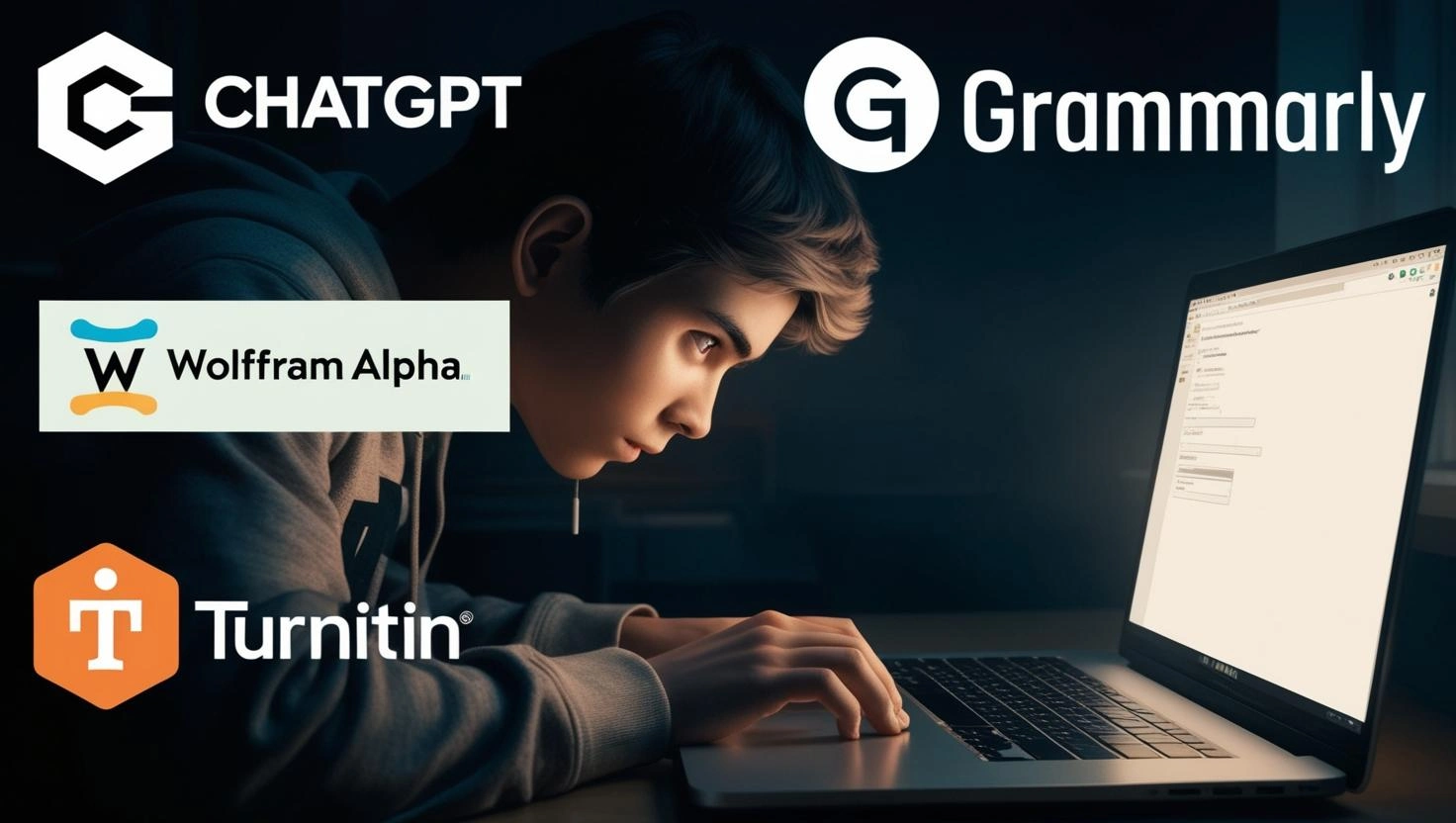
1. ChatGPT (OpenAI)
What it does: ChatGPT helps students brainstorm ideas, explain difficult concepts, solve coding problems, summarize long chapters, and even create study plans. Many students also use it to prepare for exams or practice interview questions.
Why Schools Are Banning It: Teachers worry that students may submit AI-generated essays as their own work or rely on ChatGPT instead of developing research and writing skills. Because the quality of AI-generated content has improved significantly, distinguishing between original and AI-assisted work has become more challenging.
Why Students Love It: When used responsibly, ChatGPT can feel like a personal tutor available 24/7. Instead of simply providing answers, it can explain concepts in simpler language, generate practice questions, and help students understand topics they find difficult.
Best for: Homework help, revision, brainstorming, coding support, and study planning.
2. Grammarly
What it does: Grammarly checks grammar, spelling, punctuation, clarity, and writing style while suggesting improvements that make essays and assignments easier to read.
Why some schools restrict it
Some educators believe students may become too dependent on AI-generated writing suggestions instead of learning grammar and editing skills themselves—especially when advanced AI rewriting features are used.
Why students keep using it
Most students don’t use Grammarly to cheat. They use it to catch mistakes they missed, improve sentence structure, and submit cleaner assignments with greater confidence.
Best for: Essays, emails, reports, and academic writing.
3. QuillBot
What it does: QuillBot rewrites sentences, summarizes articles, checks grammar, and helps students express ideas more clearly without changing the original meaning.
Why Schools Are Banning It: Its paraphrasing feature can be misused to rewrite existing content and make copied work appear original, raising concerns about academic honesty.
Students often use QuillBot to simplify complex sentences, improve readability, or rewrite awkward paragraphs when English isn’t their first language.
Best for: Paraphrasing, summarizing, and improving writing clarity.
4. Photomath
What it does: Solves math problems by scanning a photo and providing step-by-step explanations
Why Schools Are Banning It: Educators worry that students rely on it to get answers instead of developing problem-solving skills.
Why Students Love It: It breaks down complex equations into easy-to-follow steps, helping students understand math concepts better.
5. Wolfram Alpha
What it does: A computational engine that solves equations and answers factual queries
Why Schools Are Banning It: Schools fear that students will depend on it rather than practicing manual problem-solving.
Why Students Love It: It not only provides answers but also explains the underlying concepts in detail.
6.Turnitin AI Detection
What it does: A plagiarism detector that also flags AI-generated content.
Why Schools Are Banning It: Ironically, Turnitin’s AI detection often leads to false positives, causing frustration among students.
Why Students Love It: Many use it to check their own work before submission, ensuring originality.
7. Socratic (by Google)
What it does: A homework helper that explains concepts across subjects.
Why Schools Are Banning It: Socratic uses AI to provide instant answers to questions across multiple subjects, making teachers wary of its misuse.
Why Students Love It: It explains concepts clearly using step-by-step guides and visual explanations.
8. GitHub Copilot
What it does: An AI coding assistant that suggests code as you type.
Why Schools Are Banning It: Some schools believe it undermines programming education by reducing the need for students to write code from scratch.
Why Students Love It: It speeds up coding assignments and provides useful coding suggestions in real-time.
9. DeepL Translator
What It Does: An AI-powered translation tool known for its accuracy.
Why Schools Are Banning It: Some schools worry that AI-powered translators make students overly dependent on technology for language learning.
Why Students Love It: It provides highly accurate translations, making it easier to learn and understand new languages
10. Perplexity AI
What It Does: A research tool that summarizes multiple sources into concise answers.
Why Schools Are Banning It: Schools fear that AI-powered search engines like Perplexity encourage students to bypass traditional research methods.
Why Students Love It: It simplifies research by providing well-structured summaries in seconds.
11. Tome AI
What It Does: Tome AI generates AI-powered presentations and organizes content into slides.
Why Schools Are Banning It: Educators worry that automated presentations diminish creativity and effort.
Why Students Love It: It saves time by organizing ideas into professional-looking slides.
12. SlidesAI
What It Does: An AI tool that automates slide creation for presentations.
Why Schools Are Banning It: Some believe that AI-generated presentations lack originality and student input.
Why Students Love It: It enhances visual storytelling while reducing time spent on formatting.
13. Scribbr AI Proofreader
What It Does: Scribbr AI Proofreader is an AI-powered tool that improves grammar and writing quality.
Why Schools Are Banning It: Schools argue that AI proofreading reduces students’ engagement with their own writing and editing process.
Why Students Love It: It helps refine essays and catch grammar mistakes that might go unnoticed.
14. Speechify
What It Does: Speechify is an AI-powered text-to-speech app that converts written text into audio.
Why Schools Are Banning It: Some educators worry that it encourages students to listen instead of actively reading.
Why Students Love It: It’s a game-changer for auditory learners and students with reading difficulties.
15. Caktus AI
What It Does: Caktus AI is an AI-powered homework assistant that generates answers and explanations for various subjects.
Why Schools Are Banning It: This AI-powered homework assistant can generate essays and answer test questions, raising concerns about academic honesty.
Why Students Love It: It provides quick, AI-generated answers and explanations for homework questions.
Also read: Top 10 AI Gadgets for Students in 2026Why Schools Restrict AI Tools: It’s More Than Just Cheating
When schools first reacted to generative AI, many chose the simplest solution—blocking access. But as AI became more common in education, the conversation changed.
Today, most educators agree that AI isn’t going away. The real challenge is helping students use it responsibly while protecting academic integrity.
Here are the biggest reasons why many schools still restrict certain AI tools.
1. Students May Skip the Learning Process
The biggest concern isn’t that AI gives answers—it’s that students might stop thinking for themselves.
For example, if a student copies an AI-generated essay without understanding the topic, they may earn a good grade but learn very little. Over time, this can weaken writing, research, and critical thinking skills.
That’s why many teachers encourage students to use AI for brainstorming, explanations, or revision instead of submitting AI-generated work as their own.
2. AI Isn’t Always Correct
One of the biggest myths about AI is that it’s always accurate.
In reality, tools like ChatGPT and other AI assistants can occasionally generate outdated information, incorrect facts, or even completely made-up references. AI researchers often call these mistakes “hallucinations.”
Students who blindly trust AI without checking reliable sources can end up learning incorrect information or citing facts that don’t exist.
A simple habit—verifying important answers with textbooks, trusted websites, or your teacher—can prevent many of these mistakes.
3. Schools Want Students to Develop Real Skills
Writing, solving problems, and conducting research are skills that improve through practice. If AI completes every assignment, students miss opportunities to develop these abilities on their own.
Think of AI like a calculator.
A calculator is incredibly useful, but students still need to understand basic mathematics before depending on it. The same principle applies to AI writing and learning tools.
4. Privacy and Student Data
Many AI platforms require users to create accounts or share information while using their services.
Schools have to consider questions such as:
- Where is student data stored?
- Who has access to uploaded files?
- Can conversations be used to improve AI models?
Because of these concerns, some schools only approve AI tools that meet their privacy and security requirements.
5. Not Every Student Has Equal Access
AI has the potential to improve education, but access isn’t equal everywhere. Some students have fast internet, premium AI subscriptions, and personal laptops, while others rely only on school computers or shared devices.
Schools worry that unrestricted AI use could unintentionally widen the gap between students who have access to advanced technology and those who don’t. Creating fair AI policies is often just as important as deciding which tools to allow.
Also Read: AI Tools Students Use for Smart Exam Practice & Revision (2026)
The Middle Ground: How Schools Can Regulate AI Instead of Banning It
Rather than banning AI outright, innovative schools are testing balanced approaches:

While some schools have taken a strict approach and banned AI tools for students outright, others are exploring more balanced strategies that harness AI’s benefits while addressing concerns about academic integrity. Here are some forward-thinking approaches schools can take:
1️⃣ Supervised AI Use Zones Instead of Blanket Bans
Instead of outright prohibiting AI, some schools are setting up supervised environments where students can use approved AI tools for specific tasks. For example, Minnesota’s “AI Zones” allow students to explore AI applications within controlled classroom settings,
promoting responsible usage. This approach encourages ethical AI literacy while ensuring students don’t misuse the technology.
2️⃣ Student-Led AI Governance Committees
Empowering students to participate in tech-related decision-making fosters responsibility and accountability. At Denver’s South High School, a student-tech council, comprising students, IT staff, and educators, votes on AI tool approvals. As a result, the school has managed to integrate AI responsibly—without imposing bans—ensuring technology supports learning rather than replacing critical thinking.
3️⃣ “AI Drivers Ed” Courses for Digital Literacy
Many students lack formal training in AI ethics, misinformation detection, and responsible tech use. ethics to curb AI cheating in education. That’s why California has launched pilot programs that teach students how to:
- Properly cite AI-generated content in research papers
- Identify and challenge deepfakes and AI-driven misinformation
- Understand cybersecurity risks associated with AI-powered tools
Just like driver’s education ensures safe road practices, AI literacy courses prepare students for responsible tech use in academia and beyond.
4️⃣ Public AI Resource Hubs for Equal Access
Banning AI tools disproportionately affects students from lower-income backgrounds who may rely on free educational AI to bridge learning gaps. To address this, New York City has introduced “Tech Lending Hubs“, where students can borrow approved AI-powered learning tools and devices for free. This initiative ensures all students can benefit from AI without restrictions while maintaining academic integrity.
Also Read: Best AI Tools for CBSE Exam Practice & Smart Revision (2026)
Editor’s Note
As a tutor, I’ve seen students improve dramatically when they treat AI like a study partner instead of an answer machine. The students who ask AI to explain why an answer is correct usually perform much better than those who only ask for the final answer.
Conclusion: Should AI Be Banned or Embraced?
The debate over ChatGPT banned in schools isn’t about tech—it’s about trust. As one student tweeted: “You can ban our apps, but you can’t ban our need to survive your broken system
Banning AI tools isn’t a perfect solution. While concerns about academic integrity are valid, AI also opens new doors for education. Instead of outright bans, schools should focus on teaching students how to use AI responsibly.
These tools aren’t just shortcuts—they’re powerful assistants that can enhance learning when used correctly. The challenge is finding the right balance between preventing misuse and fostering innovation in education.
What do you think? Should AI tools be banned in schools, or should they be integrated into learning? Which of these 15 tools would you fight to keep in school? Tell us below!
For more ways AI’s helping in education, check out my articles at futurereadystars.com—let’s keep them shining

My name is Asheesh Kumar i am a dedicated educator and have a deep understanding of artificial intelligence, I aim to transform traditional learning methods by integrating cutting-edge technology and AI-driven tools into education. As a teacher and personal tutor, I have the privilege of working with many students and understanding their individual strengths and weaknesses. With this insight, I know how to help each student overcome their challenges and improve their skills. Understanding each student’s unique learning style and needs allows me to tailor lessons that maximize their potential. This holistic approach not only boosts academic performance but also builds confidence and a lifelong love for learning.
Your article helped me a lot, is there any more related content? Thanks!