
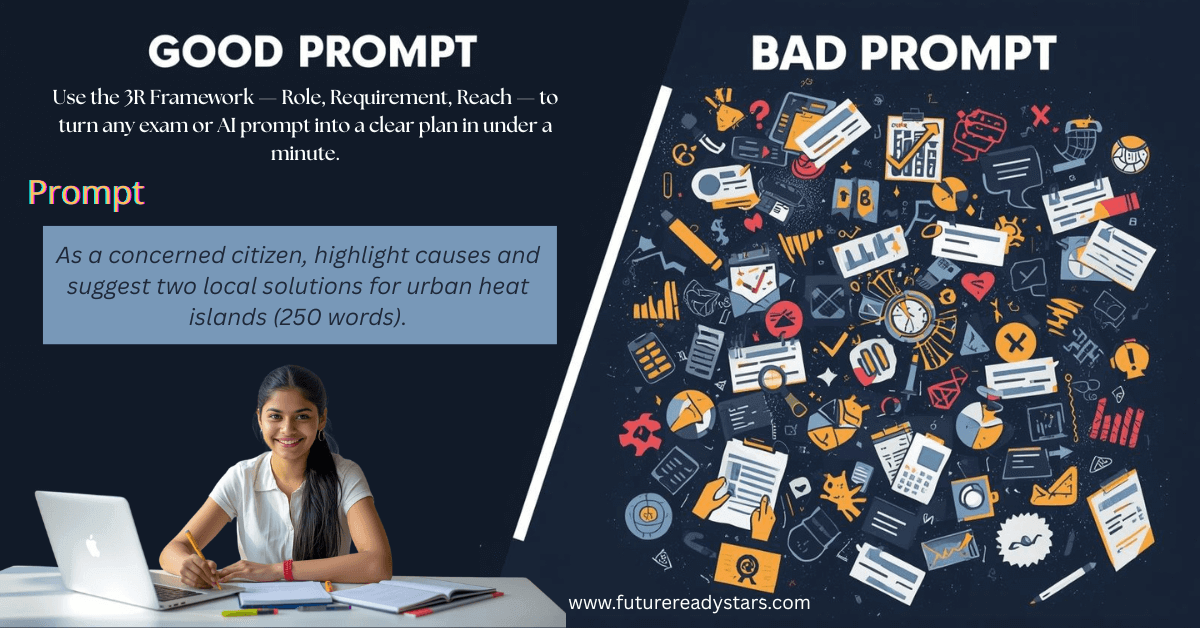
If you’ve ever stared at a blank page, unsure where to start, you’re not alone. In 2025, “prompt writing for students” is more than just responding to a question in an exam. It’s a life skill that helps students analyze tasks, ask better questions, and produce clear, insightful writing—whether you’re in a CBSE classroom in India, crafting an essay for a global curriculum like IGCSE orIB, or preparing content for college applications.
Indian-students
Best Laptops & Tablets for Students 2025: Tutor’s Budget Picks

Introduction: From Advice to Action
“Sir, which laptop should I actually buy?”
After my tablet vs laptop comparison guide went live, my inbox exploded. Parents loved the decision framework, but now they wanted the real deal—specific models, exact prices, and honest reviews from someone who’s actually seen these devices in action with real students.
Tablet vs Laptop for Students 2025: Tutor’s Guide for Parents

Introduction: The Modern Student’s Dilemma
“Sir, should I buy a tablet or a laptop for my child?”
As a tutor, I hear this almost every week. Parents want their children to stay up to date with technology, but the options in 2025 are overwhelming. Tablets are light, portable, and filled with interactive apps. Laptops, on the other hand, are productivity machines—great for typing long assignments, coding, or using AI-powered research tools.
15 Best AI Apps That Make CBSE Studying 10× Easier [By Class & Subject]
Transform your child’s academic journey with these game-changing AI tools – tested by real CBSE students and approved by teachers nationwide
The CBSE education landscape has dramatically shifted in 2025. With the introduction of competency-based questions and increased focus on application-based learning as outlined in the official CBSE curriculum, students from Classes 6 to 12 are discovering that traditional rote memorization simply isn’t enough anymore.
Google AI Pro Free for Students 2025: Get $240 Worth of AI Tools
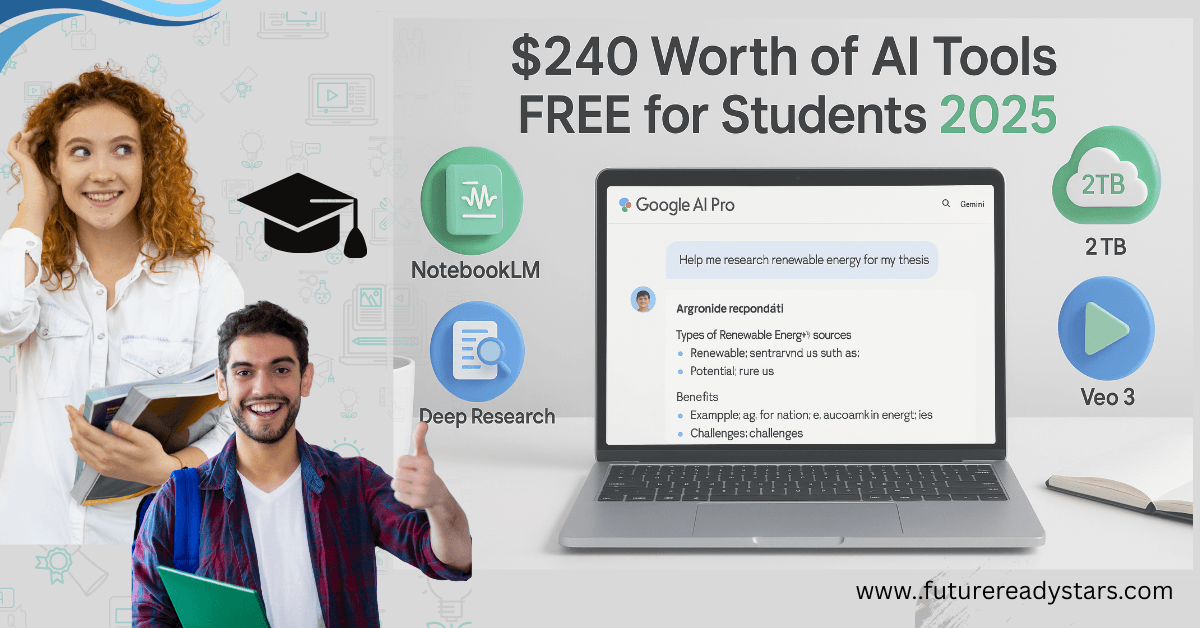
Imagine logging onto your campus platform and having a personal AI assistant ready to help you master every subject, organize notes, generate quizzes, and create study guides—all for free. In 2025, Google AI Pro for students makes this possible, offering Gemini 2.5 Pro, NotebookLM, Guided Learning, and 2 TB of storage.
Best AI Tools for CBSE Students to Solve Math Problems (2025): Free & Paid Options
Math can be magic… or mayhem.
For some CBSE students, it’s that subject where numbers dance and formulas click. For others, it’s a battlefield of variables and half-erased scribbles. I’ve been on both sides of that desk—as a tutor watching “Aha!” moments spark, and as the patient explainer when practice after practice still didn’t make sense.
Best AI Tools for CBSE Exam Practice & Smart Revision (2026)

Last updated: Jan 2026
Are there AI tools that genuinely help CBSE students practice smarter and generate syllabus-aligned question sets? In 2025, these tools go beyond basic summaries to help with concept practice, quiz creation, and targeted revision — based on past papers and NCERT patterns.
As a CBSE tutor myself, I’ve seen firsthand how students struggle to identify important topics, especially during final revision. In the past year, I’ve explored several AI-powered tools with my students—and to my surprise, many actually helped us narrow down possible exam questions based on previous years’ papers, patterns, and CBSE guidelines.
How I Built a No-Code AI Chatbot for CBSE & US Education
A no code AI chatbot is a game-changer for businesses, educators, and startups who want smart automation—without writing a single line of code. In this guide, we’ll explore the best platforms, benefits, and use cases of no code AI chatbot tools in 2025.
The Future of AI in Education: Key Benefits & Trends in 2025
Introduction: How AI is Shaping the Future of Education in 2025
In 2025, artificial intelligence (AI) is no longer just a trendy term—it’s making a real impact in education. From customized learning experiences to smart tutoring systems, AI is helping students learn better and making teaching easier for educators. This isn’t a glimpse into the future—it’s happening right now. I’ve seen how my students use AI in their learning. Many of them treat it almost like a friend, relying on it for help with their studies. Whether they need assistance with research, solving problems, or improving their writing, AI tools have become their go-to resource. It’s amazing to see how comfortable they are with this technology, In this article, we’ll explore how AI is transforming education, the key benefits it offers, and the exciting trends shaping the future of learning.
“What is AI? All You Need to Know About Artificial Intelligence” In 2025

What is AI
in today’s rapidly evolving world of technology, Artificial Intelligence (AI) has become an integral part of our lives. For instance, from virtual assistants like Siri and Alexa to self-driving cars, Artificial Intelligence is shaping how we interact with technology and experience the world. However, what exactly is AI, and why is it so important? Therefore, this article explores the concept of AI, its classification, historical milestones, and its significance in modern life.
“Understanding the Basics of Artificial Intelligence”
“AI will be the best or worst thing ever to happen to humanity. We do not yet know which.”
— Stephen Hawking
“Artificial Intelligence (AI) primarily refers to the ability of a machine or computer system to simulate human intelligence and perform tasks that typically require human cognition. These tasks include, for example, learning, reasoning, problem-solving, understanding natural language, and perception. Ultimately, the primary goal of AI is to develop machines that can think, learn, and adapt, effectively mimicking human intelligence.”
| “Intelligence is the ability to learn and to deal with new situations. When a computer or a robot solves a problem or uses language, it may seem to be intelligent. However, this type of intelligence is different from human intelligence. It is called artificial intelligence, or AI.” |
In other words, “Artificial intelligence is the capability of a computer to perform tasks that generally require human intelligence or human assistance.”
“How AI Technology Works: A Step-by-Step Guide”

"Imagine waking up in the morning and effortlessly asking your virtual assistant to set your day in motion. For instance, it could check your calendar, turn on the lights, and even order your favorite coffee from the nearest café. This level of convenience is exactly what AI-powered assistants like Alexa and Siri bring to our everyday lives, transforming routine tasks into seamless experiences."
AI, or Artificial Intelligence, essentially mimics human intelligence to perform tasks such as learning, reasoning, problem-solving, and understanding language.
Here’s a simplified process of how AI works:
- Data Collection: Artificial Intelligence systems gather vast amounts of data from various sources, such as sensors, images, texts, or user interactions.
- Data Processing: Artificial Intelligence algorithms analyze the collected data using techniques like machine learning, natural language processing, and neural networks.
- Learning Patterns: AI learns patterns and relationships within the data through training processes. For example:
- Supervised Learning: Artificial Intelligencelearns from labeled data.
- Unsupervised Learning: Artificial Intelligence identifies patterns in unlabeled data.
- Making Decisions: Based on its training, AI generates predictions or makes decisions. For instance, recommending products, detecting diseases, or driving cars autonomously.
- Feedback and Improvement: AI systems refine themselves by incorporating feedback to improve their accuracy over time.
“The Evolution of AI Technology: Key Milestones and Breakthroughs”
Artificial Intelligence has a fascinating history, marked by groundbreaking advancements and challenges. As a result, AI continues to be a rapidly advancing field, constantly pushing the boundaries of technology.
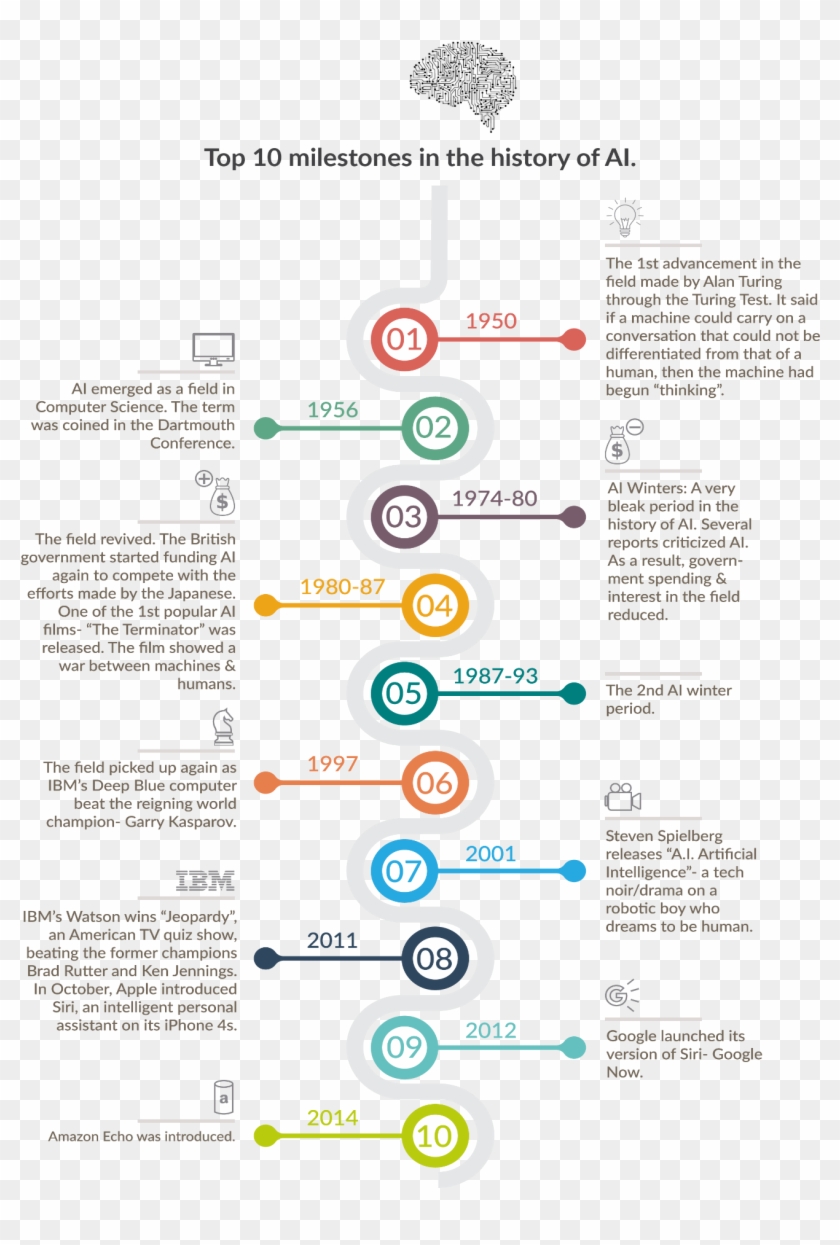
Here are 10 milestones that have shaped the field:
- 1950: Alan Turing introduced the Turing Test, proposing that if a machine could carry on a conversation indistinguishable from that of a human, it could be considered intelligent.
- 1956: The term “Artificial Intelligence” was coined at the Dartmouth Conference, establishing AI as a field in computer science.
- 1974-1980: The first “AI Winter” occurred, marked by reduced funding and interest in AI research due to unmet expectations.
- 1980-1987: AI gained renewed attention with films like “The Terminator,” highlighting the potential of intelligent
- 1980-1987: AI gained renewed attention with films like “The Terminator,” highlighting the potential of intelligent machines.
- 1987-1993: The second “AI Winter” set in as skepticism and reduced investment returned.
- 1997: IBM’s Deep Blue defeated world chess champion Garry Kasparov, showcasing the power of Artificial Intelligence in specialized tasks.
- 2001: Steven Spielberg’s film “A.I. Artificial Intelligence” explored the emotional and ethical dimensions of Artificial Intelligence
- 2011: IBM’s Watson won the quiz show “Jeopardy!”, demonstrating AI’s potential in processing vast amounts of data and answering complex questions.
- 2012: Google launched its voice assistant, Google Now, bringing AI-powered assistance to smartphones.
- 2014: Amazon introduced the Echo smart speaker, powered by the Alexa AI assistant, revolutionizing home automation.
“Strong AI vs. Weak AI: Key Differences”

Artificial Intelligence can be broadly classified into two main categories: specifically, Strong AI and Weak AI.
Strong Artificial Intelligence
Strong Artificial Intelligence refers to systems that can perform any intellectual task a human being can do. Specifically, These systems exhibit human-like reasoning, understanding, and adaptability. Key characteristics include:
- Human-Level Cognition:
- Think, understand, and act like humans without pre-programmed responses.
- Possess the ability to adapt to new situations and solve problems independently.
- Unpredictable Responses:
- Like humans, strong Artificial Intelligence systems can provide unpredictable responses based on learned experiences rather than predefined logic.
- Example: During a conversation, you might anticipate someone’s reply, but their response may still surprise you. Strong AI mimics this unpredictability.
- Beyond Original Programming:
- “Strong Artificial Intelligence (AI) systems have the remarkable capability to surpass their initial programming, thereby enabling them to develop advanced and innovative strategies. For instance, in advanced gaming, AI programs not only outperform human players but also devise unexpected and highly effective tactics. As a result, these systems showcase their ability to think beyond predefined rules and adapt to complex scenarios.”
- Potential Use Cases:
- General problem-solving across multiple domains.
- Decision-making in real-world scenarios without prior programming.
Weak Artificial Intelligence (ANI)
Weak Artificial Intelligence refers to systems designed to perform specific tasks efficiently and intelligently. Unlike Strong Artificial Intelligence, these systems have a limited scope and lack human-like reasoning or adaptability.
Recommendation Systems: Platforms like Netflix suggest content based on predefined algorithms analyzing user behavior.
Key Characteristics:
- Specialized in performing predefined tasks.
- Operates within a restricted domain of knowledge.
- Relies on pre-programmed rules and data to function.
Lack of Broader Understanding:
- Does not possess general intelligence or the ability to adapt to new or unrelated tasks.
- Executes commands without comprehending the context or reasoning behind them.
Examples:
Virtual Assistants: Siri and Alexa respond to specific voice commands, such as turning on the TV or setting reminders.
Chess Programs: Advanced AI-powered chess software excels at gameplay within its programmed domain but cannot perform unrelated tasks.
Key Principles of Artificial Intelligence
Artificial Intelligence is transforming industries and daily life. Specifically, here are its core principles:
1. Machine Learning (ML)
ML trains algorithms to analyze data and make predictions without explicit programming. Examples:
- Recommendation Systems: Suggesting personalized content on platforms like Netflix.
- Fraud Detection: Identifying suspicious transactions in finance.
2. Deep Learning
Deep Learning uses multi-layered neural networks to process complex data. Applications include:
- Image Recognition: Detecting objects or faces in images.
- Speech Recognition: Understanding spoken language in virtual assistants.
3. Natural Language Processing (NLP)
NLP enables machines to understand and respond to human language. Key uses:
- Chatbots: Automating customer support.
- Language Translation: Breaking language barriers with tools like Google Translate.
The State of AI in 2025

As we move further into 2025, AI continues to grow at an unprecedented pace, influencing various industries and everyday life.
Here are some notable trends and news in Artificial Intelligence for 2025:
- Generative AI: Tools like ChatGPT and DALL-E have become mainstream, thereby empowering creators, businesses, and educators with AI-generated content, from text to images.
- Healthcare Revolution: AI-driven diagnostics and robotic surgeries are improving patient outcomes. Furthermore, AI systems are now capable of early disease detection with accuracy rates surpassing traditional methods.
- Sustainability Efforts: AI is being leveraged to optimize energy consumption, while simultaneously managing resources efficiently, and in addition, combat climate change through predictive analytics and smart grids.
- Artificial Intelligence Legislation: Governments worldwide are enacting policies to regulate Artificial Intelligence usage, ensuring ethical practices and minimizing risks of bias and misuse.
- Autonomous Vehicles: Self-driving cars are closer than ever to becoming a reality, with major companies conducting large-scale trials in urban environments.
- AI in Education: Personalized learning platforms powered by Artificial Intelligence are helping students learn at their own pace, thereby bridging gaps in traditional education systems. Moreover, we are also working on applying AI in education on our platform futurereadystars.com
- AI-Powered Creativity: From music composition to scriptwriting, Artificial Intelligence is co-creating alongside humans, enhancing productivity and pushing creative boundaries.
“The Ethical Challenges of AI”
While Artificial Intelligence offers immense potential, at the same time, it also poses significant challenges. Notably, Ethical concerns about data privacy, bias in decision-making, and the potential for job displacement are pressing issues. Moreover, There is a growing need for transparency and accountability in AI systems in order to build trust and ensure equitable benefits for all.
Conclusion
Artificial Intelligence is not just a technological advancement; rather, it is a transformative force reshaping our world. Since its humble beginnings in the 1950s to the sophisticated systems of 2025, Artificial Intelligence has come a long way. Today, It is driving innovation, solving complex problems, and enhancing human capabilities across industries.
Looking ahead, the focus must be on developing Artificial Intelligence responsibly. By addressing ethical concerns, fostering collaboration, and prioritizing inclusivity, we can harness the true potential of Artificial Intelligence to create a better, smarter, and more sustainable world for everyone.
“Share Your Vision: How Will AI Shape Your Future?”
“Artificial Intelligence is changing the way we live, work, and interact with the world around us. How do you see it impacting your life in the coming years? Let us know your thoughts in the comments, or join the discussion on FutureReadyStars.com!”